
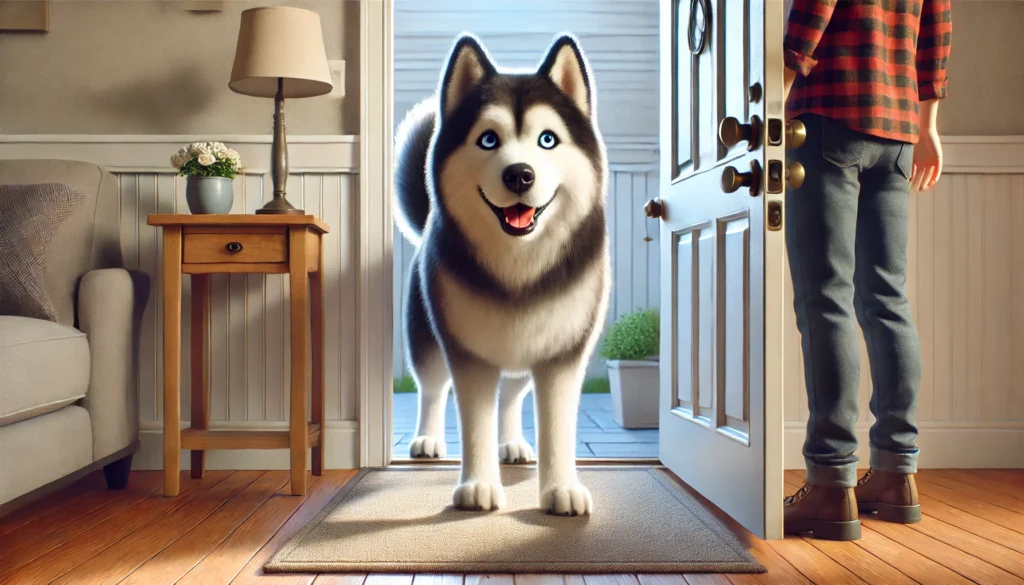
With their wolf-like looks, piercing blue eyes, and strong, athletic build, Siberian Huskies often give off the impression of being natural-born protectors. But while they may look intimidating, the reality is quite different.
Huskies are not natural guard dogs.
In this article, you’ll discover:
- Why Huskies don’t excel as guard dogs
- The difference between guarding, alerting, and aggression
- How you can use your Husky’s traits for home awareness (without expecting full protection)
The Guard Dog Myth: Huskies Look the Part, But Don’t Act It
Despite their appearance, Huskies are not known for protective instincts. They were never bred to defend property or act aggressively. In fact, they tend to be:
- Extremely friendly — even with strangers
- Non-territorial — they don’t instinctively protect spaces
- Independent-minded — less responsive to obedience-based protection commands
- Built for endurance, not guarding — unlike breeds like German Shepherds or Rottweilers
Their main role in history was pulling sleds across vast snowy terrains, working closely with humans — not guarding them.
What a Husky Typically Does When a Stranger Arrives
If someone approaches your home, your Husky might:
- Bark or howl briefly (if at all)
- Run toward the person with a wagging tail
- Show enthusiasm or curiosity
- Rarely display suspicion or aggression
Most Huskies are social and excited to meet new people. They’re more likely to invite a stranger in than scare them away.
Do Huskies Bark at Intruders?
Sometimes — but not reliably.
Here’s the issue:
- Many Huskies are not regular barkers
- They often “talk” or howl more than they bark
- Their vocalizations are usually for fun or attention, not warnings
- What sounds like alert barking might just be their way of saying “hello”
While their looks may act as a visual deterrent to someone unfamiliar, you probably can’t count on them to take action beyond a few curious sounds.
Can You Train a Husky to Be More Protective?
To a limited degree — yes.
You can teach a Husky to:
- Bark on command
- Alert you when they hear a knock or noise
- Respect household boundaries through obedience training
However, you can’t change their fundamental instincts. Trying to train them into full-fledged protection dogs often leads to:
- Confusion
- Anxiety
- Unwanted behavioral issues
They simply aren’t wired for defense roles — and forcing them into that role can backfire.
Are There Any Security Benefits to Owning a Husky?
Absolutely — but they’re subtle and more passive.
A Husky can contribute to home security in the following ways:
- Appearance: Their intense look can make strangers think twice
- Awareness: They’re naturally alert and sensitive to sound
- Responsiveness: With training, they can let you know when something’s unusual
- Protectiveness of people: In extreme situations, they might act out of loyalty to their family — but not out of instinct
They may intervene in a true threat, but don’t expect consistent, trained-guard behavior.
Better Roles for a Husky (Besides Guarding)
Instead of pushing them into a role they weren’t meant for, let your Husky thrive in what they do best:
- 🐾 Loyal companion dog with boundless energy and affection
- 🏞️ Adventure partner for hikes, running, snow, and trail exploration
- 🧠 Emotional support or therapy animal, when well-socialized
- 👂 Watchdog — light alerts to activity without aggressive follow-up
They excel in companionship and communication — not confrontation.
Final Thoughts: Huskies Aren’t Guards — They’re Greeters
If you’re looking for a dog to aggressively protect your property, a Husky probably isn’t the breed for you.
But if you want a friendly, alert, intelligent companion who may howl at the sound of a knock — and then happily roll over for a belly rub — you’ve found your match.
Let your Husky be what they truly are:
Charming, curious, and social dogs who would rather make friends than fight.


