
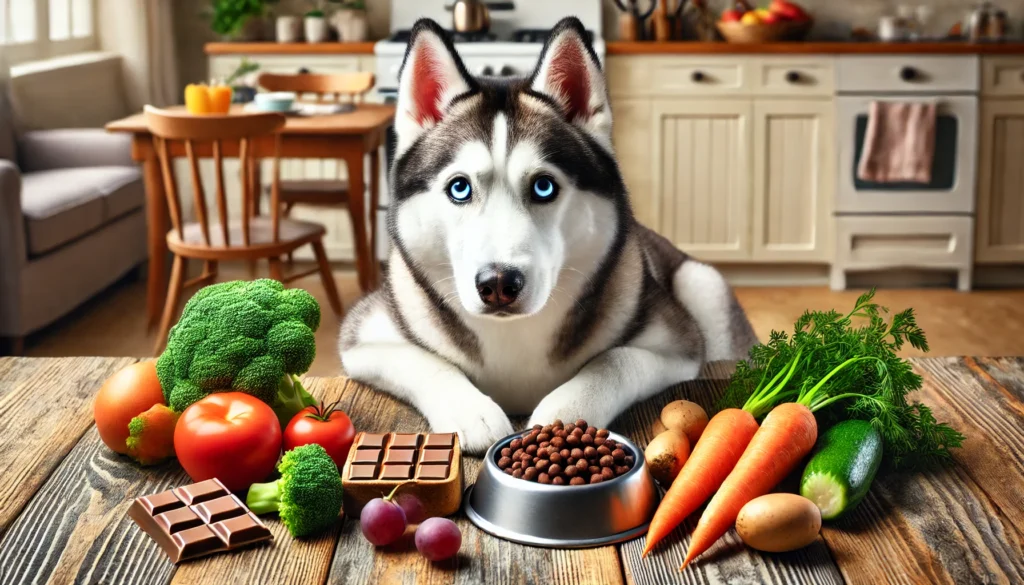
Siberian Huskies are energetic, intelligent dogs with unique dietary needs. As a responsible pet parent, one of your top priorities is knowing what your Husky can and can’t eat. Feeding them the wrong food can lead to serious health issues — from digestive upset to toxic reactions. This guide breaks it all down: safe foods, dangerous items, and tips for a balanced diet.
Understanding the Husky Digestive System
Siberian Huskies have a highly efficient metabolism, originally adapted to survive on minimal food during harsh Arctic conditions. Today, while their caloric needs are higher due to increased activity levels, their digestive system remains sensitive to many ingredients — especially those found in processed human foods.
That means not everything you snack on is suitable for your fluffy companion.
Safe Foods for Siberian Huskies
Many natural, whole foods are safe — and even beneficial — for Huskies when given in moderation. Here’s a list of healthy options:
✅ Vegetables:
- Carrots: Great for chewing and full of beta-carotene.
- Broccoli: Rich in fiber and vitamin C.
- Green beans: Low-calorie and filling.
- Cucumbers: Hydrating and refreshing in hot weather.
- Sweet potatoes: Excellent baked, with no added sugar or butter.
✅ Fruits:
- Blueberries: High in antioxidants.
- Apples (no seeds): A crunchy, vitamin-packed snack.
- Watermelon (no seeds or rind): Hydrating and safe in small amounts.
- Bananas: Good in moderation, but high in sugar.
- Strawberries: Another antioxidant-rich treat.
✅ Protein:
- Cooked chicken (no bones, no seasoning): Lean and digestible.
- Boiled eggs: A protein-rich option, fully cooked.
- Salmon (cooked): High in Omega-3, good for coat and skin.
- Plain Greek yogurt: Great for gut health, in small portions.
✅ Grains:
- Brown rice: A good source of energy.
- Oatmeal: Can soothe an upset stomach and add fiber.
- Quinoa: A complete protein source, easy to digest.
Always introduce new foods gradually and observe your Husky for any allergic or digestive reactions.
Foods You Should Never Feed a Siberian Husky
Some foods are not just unhealthy — they can be toxic or even fatal for dogs. These items should be strictly avoided:
❌ Toxic Foods:
- Chocolate: Contains theobromine, toxic to dogs even in small amounts.
- Grapes and raisins: Can cause sudden kidney failure.
- Onions and garlic: Damage red blood cells, even in powdered form.
- Xylitol (artificial sweetener): Found in sugar-free gum and baked goods, extremely toxic.
- Macadamia nuts: Known to cause weakness, vomiting, and tremors.
- Alcohol: Even small amounts can cause poisoning.
- Caffeine: Found in coffee, tea, energy drinks — avoid completely.
❌ Unsafe Human Foods:
- Fatty meats and scraps: Lead to pancreatitis.
- Cooked bones: Can splinter and cause internal damage.
- Dairy (in excess): Many dogs are lactose intolerant.
- Salty snacks: Cause dehydration and sodium ion poisoning.
- Raw dough: Expands in the stomach and can lead to bloat.
If your Husky ingests any of the above, contact a veterinarian immediately — don’t wait for symptoms.
Tips for a Balanced Husky Diet
A balanced diet helps keep your Husky healthy, happy, and full of energy. Here’s how to get it right:
- Stick to a routine: Feed at the same times each day.
- Measure portions: Avoid overfeeding; Huskies don’t need as much food as some other breeds.
- Choose high-quality kibble or vet-approved raw diets.
- Limit treats to 10% of their daily intake.
- Provide clean, fresh water at all times.
Talk to your vet before making major changes to your Husky’s diet or adding supplements.
Homemade Food for Huskies: Is It Safe?
Preparing homemade meals can be rewarding — but also tricky. Without the right balance of protein, carbs, fats, and vitamins, your Husky could develop deficiencies. If you want to go the homemade route:
- Work with a vet or pet nutritionist
- Follow dog-safe recipes only
- Use a mix of lean protein, vegetables, and appropriate grains
- Avoid seasoning, oils, and salt
Homemade diets can be great for dogs with food sensitivities, but must be done with care.
How to Tell If Your Husky Has a Food Allergy
Siberian Huskies are prone to certain food allergies, especially to common proteins like beef, chicken, or grains. Watch for these signs:
- Itchy skin or excessive licking
- Chronic ear infections
- Soft or frequent stools
- Gas or bloating
- Poor coat condition
If you suspect a food allergy, consult your vet for an elimination diet or allergy testing.
Final Thoughts: Feed with Love, But Feed Smart
Feeding your Siberian Husky isn’t just about filling a bowl — it’s about making intentional choices that support their health and vitality. Knowing what’s safe (and what’s dangerous) allows you to treat your dog with confidence and care.
Stick to natural, whole ingredients, avoid processed human foods, and always be cautious with anything new. A well-fed Husky is a happy, energetic, and loyal companion — and you’ll see the results in every wag, run, and howl.


